You are hurting. You wake up in pain. You don’t sleep well. You are always sick. Sluggish. Have extra weight that doesn’t seem to go away. You are irritable. Things just don’t “feel” right. You have a high HBA1C.
You want to change. Society has told you that if you just take these pills or that treatment, or that therapy, for the rest of your life, you will be ok. But if you subscribe to the theory here that all of our diets and nutrition is based off of the PHYSICS approach rather than the HORMONAL approach, you should perhaps also feed your body as such.
A pound of fat contains 3500 calories. The physics-based approach has told you to eat x amount of calories a day and exercise for y amount to get the shortfall in weight loss, z. I would contend that I DID lose 75 pounds doing this. However, I needed to count every morsel of food. Weigh everything. Measure every moment of exercise. Make up tons of meals in advance. It helped me lose weight and feel better, but nothing helped me like going to the ketogenic approach.
Most of you know of, or heard about the ketogenic diet – or keto. There are many flavors of this over the years, but there are several ways to do “keto”.
- spend the rest of your life in keto
- do keto for a period of time, then do low carb
- do keto for a period of time, do low carb, then go back to “normal eating”
This approach is the second one. I did do almost 8 months or so straight in ketosis. It is super strict, and to be in this mode of eating long term can be hard to sustain. However, “low carb” is a lot more flexible, and with this, is far, far more sustainable. And then – consider “going back to normal eating” may be mentally like, “let me go back to what I eat that got me to have extra weight”.
In this program, I wish to mimic the sentiments of the Primal Blueprint in which you have a “keto induction” phase of like 3-6 weeks, then gradually add back carbs to have a max of like 130-150. What most people aren’t tracking is how many carbs they are actually having a day. If you are an amish farmer, bailing hay, working the fields, and lifting heavy things all day long – meat and potatoes and breads do not harm you. As you eat these carbs, they are refilling your glycogen stores in your liver and muscles. They will not need to be removed from your bloodstream with insulin.
Let’s first understand what happens when you eat carbs:
On LiveStrong, you see: “Your body normally regulates blood glucose levels very closely. After you eat carbohydrates, your body breaks them down to glucose, which then enters your bloodstream. What your cells do not require for energy is taken out of circulation and stored as glycogen by your liver, because the continued presence of circulating glucose can upset the balance of fluid between your cells and your blood.”
This isn’t complete, but simplified. Big picture is the Amish guy eats a meal with potatoes, meat, and bread, and goes back out to work on the farm. As his food is being digested, the small intestine breaks down and these sugars are processed in the liver and the glucose gets sent into the bloodstream. Your body has about 4g of glucose circulating in it at all times. Your brain uses about 130g of glucose a day.
Assume about 45 minutes after eating, brother Hezekiah is out lifting hay. His muscles start using the blood glucose in there for the fast twitch muscles. His liver starts releasing glucose from the glycogen stores to keep that at 4g in the bloodstream regulated. And – now the potatoes and bread are starting to release glucose slowly, which is being immediately used by his work. He stops work, and at THIS point, if there are excess glucose molecules in the bloodstream – the body then takes it first to liver and muscle glycogen to replenish those stores, and then to the fat cells to store for long term using gluconeogenesis.
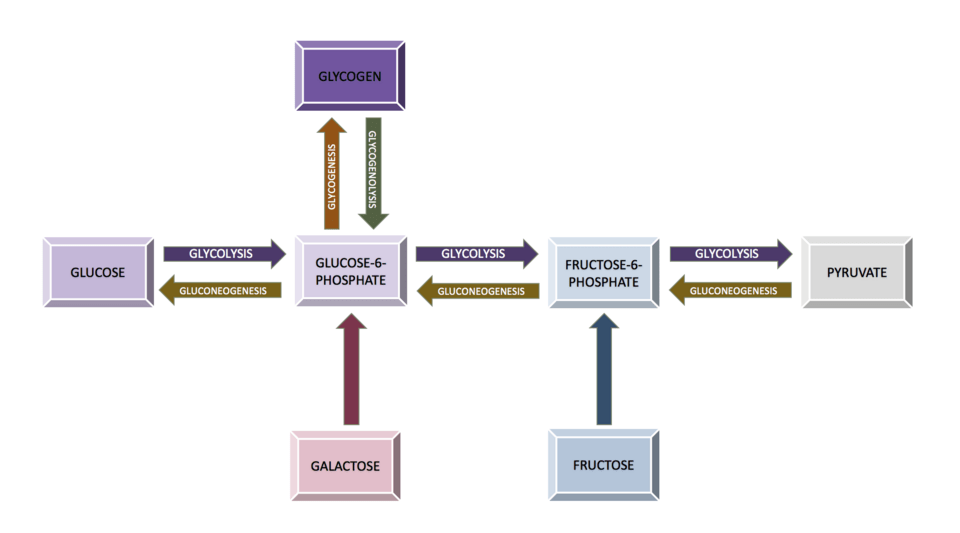
It is recommended for a sedentary person to have about 130g of carbs per day, based off of a PubMed Article entitled “Fundamentals of glycogen metabolism for coaches and athletes”. Much of what I am to summarize below is from this.
If your brain uses 130g of glucose per day, and you sit in an office building, why do you need more carbs?
“However, athletes often do not consume enough dietary carbohydrates to meet current recommendations for the daily carbohydrate intake (8–12 g carbohydrate/kg of body weight [BW])3,4 considered necessary to fully replenish muscle glycogen stores.5–7 Less-than-optimal daily carbohydrate intake is likely a result of demanding training schedules, busy lives, confusion regarding the benefits of dietary carbohydrates, and inadequate understanding of basic sports nutrition concepts.8,9“
If you are a 180 pound athlete, that is about 82kg. This suggests that you need 654 to 981g of carbs per day. If each carb is 4 calories, this suggests that an athlete should have perhaps 2600 calories a day in carbs?
“The US Institute of Medicine’s recommended daily allowance for carbohydrate consumption in sedentary adult men and women is 130 g,2 with additional carbohydrates required to match that oxidized during physical activity, a value that varies with the duration and intensity of exercise. For instance, on days that involve only light physical activity of relatively short duration, considerably less carbohydrate is required to restore muscle and liver glycogen than on heavier training days. For that reason, current recommendations for carbohydrate intake in athletes vary to reflect the daily training load”
Let’s assume this person has no weight to lose. They are in peak shape. How many calories should they have per day? 2000? 2400? 3000? Much of this depends on the body fat percent and amount of lean body mass. The more lean body mass, the more calories that you can absorb to remain in homeostasis. Assume this person was going to have a HEAVY load. There were days I burned well over 6000 calories with my activity. That was with like 3 hours of biking and running afterwards. So if I assume I need to ensure I can refuel for tomorrow and replenish those glycogen stores, this suggest I EAT 6,000 calories, and have about 43% of those calories to be carbs.
However, suggest you are a 250 pound man that wants to lose weight. Why would you have 6,000 calories? You want to create a deficit. Assume you expend 6,000 calories. But you want a deficit. And, you want to exercise tomorrow as well. Do you eat maybe 4000 calories and create the deficit? Do you then have 65% of your calories as carbs?
The big problem here is understanding the concepts of fast twitch and slow twitch muscles and VO2 max. This is how LiveStrong talks about this:
“In order to lose weight, you must burn more calories than you consume. This leads to long-term weight reduction, as your body ultimately taps into fat stores during periods of calorie deprivation. A typical person will burn about 300 calories per hour of walking, depending on your body size and the intensity of your workout, says Harvard Health Publishing. When you eat carbohydrates, they are broken down to sugars and transported in your blood, reports the Mayo Clinic. This causes a rise in blood sugar levels, which triggers the release of insulin from your pancreas. Insulin lowers blood sugar and makes carbohydrate available for either immediate energy or storage.
Carbohydrates are stored as glycogen in your muscles and liver, or as body fat. After a few minutes of walking, your body taps into your muscle glycogen stores for energy. Having a diet adequate in carbohydrates allows you to store more glycogen and support walking endurance. Aim to obtain about 60 percent of your calories from carbohydrates to provide sufficient energy for performing and recovering from exercise. Healthy carbohydrate foods include fresh fruits and vegetables, low-fat milk and whole grains, says Harvard T.H. Chan School of Public Health. Starchy vegetables, like potatoes, peas and corn, are especially rich in carbohydrates. Look for carbohydrates that naturally have a high fiber content to promote satiety and regularity. Avoid refined carbohydrates like white rice and baked goods to avoid empty calories and unhealthy weight gain.”
So in the above – you can clearly see that they have a physics-based approach where the first thing they really tell you is about calorie deficits. Then, instead of telling you not to eat carbs, they tell you to go on a hamster wheel. This article doesn’t clearly articulate the usage of substrates based on exercise. It just talks about time moving and calories.
But this is completely missing HOW your body uses substrates. All it cares about is how long you were on the hamster wheel.
Now we take a look at a research paper that talks about what type of exercise burns what substrates:
“Abstract
Carbohydrate and fat are the main substrates utilized during prolonged endurance-type exercise. The relative contribution of each is determined primarily by the intensity and duration of exercise, along with individual training and nutritional status. During moderate- to high-intensity exercise, carbohydrate represents the main substrate source. Because endogenous carbohydrate stores (primarily in liver and muscle) are relatively small, endurance-type exercise performance/capacity is often limited by endogenous carbohydrate availability. Much exercise metabolism research to date has focused on muscle glycogen utilization, with little attention paid to the contribution of liver glycogen. 13C magnetic resonance spectroscopy permits direct, noninvasive measurements of liver glycogen content and has increased understanding of the relevance of liver glycogen during exercise. In contrast to muscle, endurance-trained athletes do not exhibit elevated basal liver glycogen concentrations. However, there is evidence that liver glycogenolysis may be lower in endurance-trained athletes compared with untrained controls during moderate- to high-intensity exercise. Therefore, liver glycogen sparing in an endurance-trained state may account partly for training-induced performance/capacity adaptations during prolonged (>90 min) exercise. Ingestion of carbohydrate at a relatively high rate (>1.5 g/min) can prevent liver glycogen depletion during moderate-intensity exercise independent of the type of carbohydrate (e.g., glucose vs. sucrose) ingested. To minimize gastrointestinal discomfort, it is recommended to ingest specific combinations or types of carbohydrates (glucose plus fructose and/or sucrose). By coingesting glucose with either galactose or fructose, postexercise liver glycogen repletion rates can be doubled. There are currently no guidelines for carbohydrate ingestion to maximize liver glycogen repletion.
carbohydrate and fat are the primary substrates utilized during prolonged endurance-type exercise activities in humans (91, 111). The major determinants of fuel selection are the intensity and duration of exercise (19, 91, 111), in addition to training (37, 38, 112) and nutritional status (16, 45, 121). Endogenous carbohydrates are stored as glycogen primarily in muscle and liver. In contrast to endogenous fat stores (>100,000 kcal; >400 MJ for a 75-kg individual with 15% body fat), glycogen stores are small (<3,000 kcal; 13 MJ), and so this may limit the capacity for exercise tasks of a moderate to high intensity (∼50–90% V̇o2 max) lasting >45 min (3, 12, 18). The importance of muscle glycogen availability during prolonged exercise has received much attention over the last 50 years (13, 19). In contrast, the role of hepatic glycogen as a substrate source during exercise has been less well studied, which is due largely to the inaccessibility of tissue samples. This review provides an overview of liver glycogen metabolism during exercise and the impact of nutritional strategies to modulate hepatic glycogen use and subsequent repletion.
Historical Perspective on Liver Glycogen
The role of carbohydrate-based fuels in manipulating the perception of effort during endurance-type exercise has been known for almost a century (63). The greater reliance on carbohydrate as a substrate source during exercise of a moderate to high intensity was already demonstrated in the 1930s (20). The utilization and importance of muscle glycogen as a substrate source during exercise were demonstrated in the 1960s following the reintroduction of the Bergstrom muscle biopsy technique (12, 13). Ever since then, there has been much focus on optimizing muscle glycogen availability in relation to human function. Presumably because of the methodological limitations when trying to assess liver glycogen content, only few data have been obtained on the use of liver glycogen during exercise.
Although suggestions that liver glycogen contributes to blood glucose homeostasis have been made since at least 1855 (14), it was not until the 1960s (9, 100) and 1970s (39, 77–79) that researchers were able to take advantage of the “one-second” liver biopsy technique described by Menghini (71) to report on liver glycogen utilization in vivo in humans. It was demonstrated that fasting rapidly depleted liver glycogen content (100), with complete depletion within 48 h of fasting or following a (very) low-carbohydrate diet (79). Only when sufficient carbohydrate was included in the diet did net repletion of liver glycogen stores begin (79). This was quite a novel finding since the prevailing theory held that gluconeogenesis was the major pathway for liver glycogen synthesis, and so it would rapidly restore liver glycogen stores even during fasting or carbohydrate intake restriction (5, 48). In humans, gluconeogenesis [from the major precursors: glycerol, glucogenic amino acids (e.g., alanine), and lactate] contributes ∼55% of endogenous glucose production during the first 10 h of fasting (87). Prolonged fasting (64 h) increases the relative contribution of gluconeogenesis to ∼96% of endogenous glucose production without drastically altering the absolute rate of gluconeogenesis (from ∼7 to ∼8.5 μmol·kg−1·min−1) (87). The observation that some nonhuman species (rodents) can synthesize relatively large amounts of liver glycogen during fasting or carbohydrate intake restriction, presumably from gluconeogenesis, highlights the importance of studying liver glycogen physiology in vivo in humans (31, 42, 72, 75).
It wasn’t until the late 1980s and early 1990s that 13C magnetic resonance spectroscopy (MRS) was employed as a noninvasive human liver glycogen measurement tool (60, 92). This noninvasive method allows repeated measurements of liver glycogen content to be made without inducing the catecholamine response that sometimes is induced by biopsy procedures in unaccustomed individuals (102). A theoretical limitation of the method is that only 13C is detected (since nuclei of 12C do not posses the magnetic moment required to align with or against the magnetic field). Therefore, consumption of diets differing strongly in the 13C/12C enrichment level of the various carbohydrates may influence the assessment of glycogen content and reduce the signal-to-noise ratio. Nevertheless, the differences in 13C abundance of C3 and C4 plants are relatively small (1.09 vs. 1.10% 13C for the C-1 position of glycosyl units in sugar beet vs. sugar cane, respectively; see Ref. 43) compared with the large changes in liver glycogen concentrations with fasting, exercise, and feeding (40, 44, 87). This large signal-to-noise ratio means that differences in carbon fixation between sources of carbohydrates can likely be neglected as a confounding factor in most study designs applying 13C MRS to assess (liver) glycogen content.“
Maybe you are walking, lightly jogging, or biking in zone 2. This might use less liver glycogen and not a lot of muscle glycogen – especially if you are “fat adapted”. Phinney and Volek worked with marathon runners to get “fat adapted” with a ketogenic diet and these guys could run forever.
So let’s look at several different kinds of exercises:
- Walking (mostly ketones/fat and spares glycogen)
- At rest (just needs glucose for the brain)
- Zone 2 training (mostly ketones/fat and spares glycogen)
- Hills/sprints/stairs/heavy lifting (phosphate creatine system then glycogen stores)

So let’s recap the big deal here….
- If you are HIGHLY active with explosive movements, this is primarily fueled by the phosphate creatine system and muscle glycogen (above the glucose in the bloodstream already). What I would consider is to have some carbs 45 mins before and carbs after. My dad used to talk to me about sprinters eating a candy bar before a race, but my guess is that isn’t 100% accurate. His point was the sugar hits the bloodstream and is ready available to the runner – and this can be using a lot of anaerobic ATP. For people who do this a lot, you can see that 150g or so can be a really good number to target, and maybe even 200 if it’s race day and you want to ingest gatorade over the race for new carbs instantly being used and rocket fuel to replenish the glycogen stores for the next hill.
- If you like walks and gentle zone 2 training, you can probably get by with 100g of carbs a day, maybe 125. While your brain uses 130 or so grams, it can also get this from protein you eat. So if you eat 100g of carbs during the day, and you walk 3 miles, where is that fuel being taken from? Your fat stores. And – if a pound is 3500 calories, and you have 100 extra pounds on you, you have 350,000 calories on your stomach, so WHY are you getting hungry? If you want to lose weight, don’t you want to have the ability to not think about food and just take calories off of your stomach? Shouldn’t you eat foods that reduce hungry and improve satiety?
- If you are just laying around, you do not need one single gram of carbs. Your body will find glucose from the protein you eat and breakdown muscles you have to put into glucose for your brain.
So Livestrong tells people to eat 60% of your calories as carbs? First, I think that is horrible advice, even for an Olympic sprinter.
Second – consider if you DO eat carbs, it puts insulin in your system when you aren’t exercising, and this is then feeding you glycogen stores (which you aren’t using) and then taking this glucose to store as fat using de novo lipogenesis. The fun part of this process, is while you are digesting these carbs you are eating, the insulin is blocking the release of energy from fats.
This reminded me in IT of how resolution works – where you first look at HOSTS files, then your DNS, etc.
The body wants:
- phosphate creatine system operating for explosive movements. It then immediately starts using muscle glycogen and anerobic ATP.
- If no “explosive” movements, but high VO2 max or effort, body uses glucose in bloodstream first
- As glucose in bloodstream drops, perhaps you ate slow digesting carbs, which are now refueling your blood glucose levels and are being oxidized.
- If you are low on glucose in the blood stream and have no new glucose coming in, it looks for glucose in glycogen stores AND from fat. Fat will break down energy into ketones (and ammonia) and the like to get you energy to move.
- In trained long-distance runners, liver glycogen can be spared for brain functions and body can use ketones for low impact movements.
- After intense exercise, body wants to replenish glycogen stores. Even a banana will help that. You don’t need a giant pasta meal the day before or of.
So now we have a few categories of people. If I LIKE long distance exercise and training, and I WANT to lose weight – it makes sense for me to be active for long periods of time to use aerobic oxidation to process carbs and then tap fat stores. Adding carbs to this process will block release of fats. Likewise, a high level athlete or lifter will want more carbs to give them a topped of phosphate creatine system, muscle glycogen stores, and target carbs around intense workouts.
So why do they treat people who are 100 pounds overweight in the same breath as a trained long distance runner or a trained lifter? Because all most people see is calories in, calories out – and they do not then factor in the food going into the people. Only the calories.
With a hormonally-based approach here, we have:
- Ketogenic diet to start the process to “teach” your body to burn fat and spare glycogen
- Reduce carbs to bare minimum needed for required performance.
- Eat foods with high satiety (fats, proteins) to reduce the amount of insulin released into your system
- Time cardio work (zone 2 or walking, etc) about 45-90 minutes after eating a low carb meal. What carbs you do have, should be slow release and be consumed as you are walking. This is why they tell you to walk after dinner each night
- When you eat foods with high satiety, it also means you aren’t hungry a lot. You stop thinking about food. Your body is now naturally able to regulate the ghrelin and letpin.
- As insulin sensitivity comes back, less insulin is needed to do the previous work. Because any carbs hitting your system are being oxidized almost immediately, you do not need an insulin release and then shut the fat cells off from releasing ketones
- If you want to do HARD lifting, select ONE day a week to do it. On those days, you can have more carbs – and target them an hour before your workout and immediately after. Instead of “bro splits” every day, which creates an almost unsustainable plan, dedicate one hour a week to intensely working out the full body with heavy weights. This will help insulin sensitivity and soak up carbs to use for heavy lifting. The insulin in your system post workout with protein, post workout, helps you take protein to your cells for repair and building muscles
- Your SOLUTION to weight loss is then being able to:
- Not be hungry
- Reduce the amount of insulin needed to increase insulin sensitivity
- List heavy weights one hour a week
- Walk frequently
- OMAD – by being less hungry, and doing low carb, your body will not want to eat as much. Start considering an “eating window” for like 2 hours a day. This is allowing your body to enter into a state of “autophagy” that won the nobel prize in 2016.
- Fasting – once you get the concepts of OMAD, you can also skip a day eating here or there and do 3 day fasts. Today, this concept scares the shit out of you, as you are trained to be hungry every 3-5 hours. By doing the above, YOU train YOUR body when it is to be hungry, not the reverse. I did “Fasting Fridays” for 3 Fridays a month for 2 years. I did maybe 3 or 4 3 day fasts, which were relatively easy
- By adhering to the steps above, you now have:
- Increased insulin sensitivity
- Reduced your HBA1C
- lean body mass adding to your calorie burning machine and looking better
- Reduced need to eat and less meals to make
- Ability to block weight gain
- On top of all of this, you want to reduce processed foods and seed oils as much as possible. This means that you are reducing the omega 6 being introduced into your diet, which causes excess inflammation. Inflammation is perhaps the root cause of a lot of disease. Fasting and autophagy “eat” cancer and pre-cancer cells so that you are proactively fighting cancer. There is ZERO need for you to eat carbs – yet all of the stuff above with LiveStrong tells you to exercise a lot and eat SIXTY percent of your calories as carbs? Bullshit
- Get sunshine. If you are now eating fats properly, like your body is supposed to have, and you are getting sunlight – your body now can produce Vitamin D (your immune system!) and help you fix things. You can be ASTONISHED at the amount of disease that is reduced/removed when people do all of the above.
- If you see a “dad bod” or “mom bod” with 15-30 extra pounds in their 40s or 50s, it isn’t as simple as “their metabolism is slowing down” – rather, ask yourself why they are eating more calories than their body can burn? Why doesn’t the body just not eat so you can use it? Because you have been told to eat 3 square meals a day, you have been told to eat 60% carbs, and you have been told to do the hamster wheel after you eat 60% of carbs. Why not just avoid carbs? That dad body may be a visual cue to insulin resistance and the beginning of type 2 diabetes. Why not just tell people with a higher HBA1C to stop eating carbs?
- The insides start healing, and hormones are allowed to regulate your systems like they are supposed to. You will reverse type 2 diabetes, you will reduce your belly fat, you will have less pains and aches when you wake up, and you will get the highest quality sleep of your life. This allows you to clear cortisol out of your system and drop weight naturally.
- You will probably supplement with magnesium citrate which can help relax you. Your body is all over the place with electrolytes, and when you do a keto/low carb approach, you can pretty much eat all the salt you want.
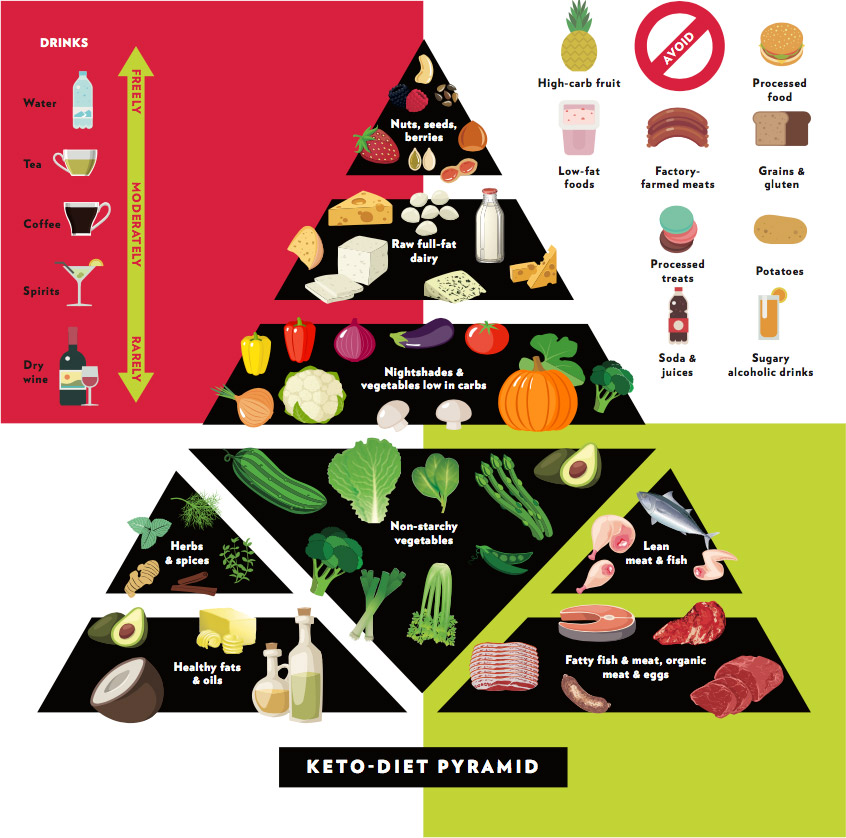
I saw this chart in the Primal Blueprint book and this is worth soooooo much to people who want to change their lives.

So the idea here is I would recommend this:
- Week 1-6 – have 30-50g of carbs or less (net carbs). Stay away from the keto stuff that markets low “net carbs”. focus primarily here on whole foods. At 3 weeks in, take a day or two and eat your “normal” foods. You will wake up feeling like shit. You will be thirsty and “gain” 7 pounds back as you fall out of ketosis. This will be pissed off in 3-4 days and you will start to feel good again.
- Weeks 6+ – start to add some carbs, but try targeting them around intense activity. Maybe weeks 1-6 your exercise was walking the dog. As your body starts to become fat adapted, your glycogen stores get depleted and you lose ALL strength. As time goes on, your body learns how to replenish the glycogen stores and you will get your strength back.
- Every 3-4 weeks, target a cheat day/weekend. Don’t go crazy with 600 carbs. But maybe there’s a wedding and you just want to eat the meal given and a piece of cake. Schedule your cheat around that. What you WANT to do is to start treating and seeing carbs as a fuel source and rare thing to eat, unless you are training heavily.
- Start to experiment with OMAD and Fasting Fridays as time goes on. This can be preventive.
But this PROGRAM as a whole – needs coordination between your healthcare professions:
- Go to your doctor to get your lipid panel and HBA1C. Ask your doctor if a low carb diet is safe for you. If you are really bad with diabetes or some other conditions, you may unknowingly put yourself into ketoacidosis
- Go to your therapist and screen for ADHD. Understand that if dopamine hits and coping mechanisms are built around food, that therapy, medication, and other coping skills need to be added so “bad food” is an extreme rarity rather than a daily indulgence
- Ask to work with a nutritionist who will be able to give you a decent amount of suggestions for low carb. This page will have tons of ideas and recipes in the future.
- Work with your trainer on a plan for you. For example – my ADHD means a standard “bro split” repeated 6 days a week forever is horrible for me, as I get bored to tears with it. Rather, one hour a day of intense workouts a week can yield tremendous results. My trainer used “muscle confusion” which had me doing something different every week for 156 straight trips to the trainer. THIS was more sustainable for ME due to my undiagnosed ADHD that found the bro splits boring, but muscle confusion interesting and varied.
Summary
People need to take a hard look at WHY they are eating as they are, and look to how they SHOULD be eating based on their own personal exercise habits, HBA1C, and lifestyle. If you are an office jockey – you should avoid all carbs over like 130. This keeps your brain fueled. But if you are not fat adapted with a ketogenic approach first – you fall into this trap of your body constantly looking for carbs, which then shuts down your exercise, down regulates your metabolism, and gives you hunger pangs all the time.
Rather, for MOST people out there that are overweight, the 4 pronged solution with this program will advise people who are overweight to focus on carb reduction and re-training their body to look for fats, cure hunger issues, help you with sleep, allow your hormones to do self regulation like they are supposed to, and build fitness through PROPERLY fueling your body based on actual workload.
The below is the keto pyramid, and this will change your life for the better.
 Low Carb Fitness 180