You have attempted to lose weight numerous times. You have meticulously counted calories, monitored carbohydrate intake, and adhered to points systems. You have engaged in countless hours of exercise and sought guidance from numerous medical professionals. You have complied with the recommendations of various nutritionists. Although you experienced some success, you ultimately regained the weight and more. You have endured a life characterized by perpetual dieting, often confronting feelings of hunger. You have followed every popular diet that has emerged.
However, you ultimately fall short in the long run.
What if I were to state that your efforts have been in vain due to misguided counsel? What if I were to inform you that well-intentioned physicians, trainers, and nutritionists have been educated in flawed scientific principles?
What if I told you that you can effortlessly shed those extra pounds without stepping foot in the gym, without investing in expensive gadgets, without obsessing over calories, and without ever feeling hungry? Imagine a plan that fuels you with all the energy you need while keeping hunger at bay! Hint: it’s around your belly, and how you are eating and exercising are preventing you from properly accessing it.
The plan, in simple terms, is to help folks understand how their body actually works when it comes to energy, food, and exercise. Most of the nutrition advice out there is based on what we call the “physics-based approach” to eating. Basically, it’s like needing gas to run a car. You can track the energy you take in, see how much work you do in watts, and even measure the heat given off to figure out how efficiently everything’s running.
So, here’s the deal: your body isn’t a car engine. It’s more like a cool biomechanical machine that gets its energy from three main sources: fats, proteins, and carbs. The usual science-y way of looking at things doesn’t really cut it because each of these energy types (measured in calories) has unique roles to play, depending on the different stuff you want your body to do. Plus, these macronutrients mess with your hormones in different ways, which totally impacts how your body uses them and utilizes your existing fat stores. And guess what? Your body actually does a bunch of different tasks, each needing its own type of fuel. When you go for this program’s “hormonally-based approach“, it’s like tuning in to what your body is honestly saying about hunger and its needs—maybe for the first time ever in your adult life. Let’s dive into the various tasks your body has to handle:
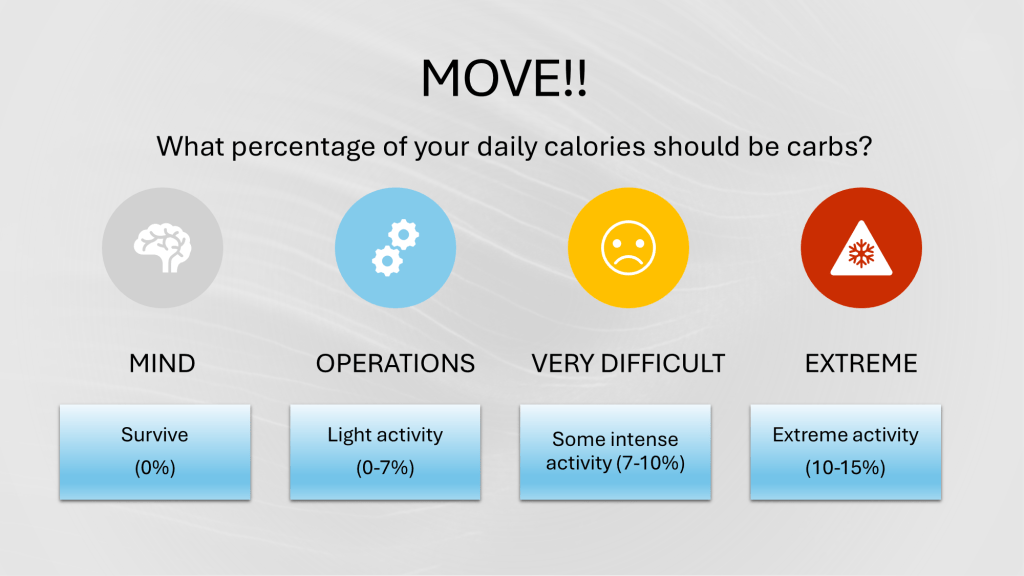
ONCE you are fat adapted, and gradually increase carbs higher, you need to understand HOW to fuel your body with carbs.
- “Mind”. Your brain needs about 110-145 grams of glucose daily to work its magic. You can score that glucose from carbs AND proteins. Just a heads-up though! Your blood sugar can’t be too high or too low. If there’s extra glucose just hanging around, your body will tuck it away as liver glycogen, muscle glycogen, or turn it into fat in a process called de novo lipogenesis. Most of the time, we’re just chilling, breathing, and catching up on our favorite shows, so we don’t really need to munch on carbs. But if you think for a living and need to dive deep into analysis, you can adjust your carb intake to keep your brain functioning at its best.
- “Operations” – it’s an easygoing activity that can be powered by glucose (from breaking down carbs or protein) OR those nifty little things called ketones, which you get when your body breaks down fats through lipolysis. You could also include stuff like light cleaning, grabbing the mail, strolling to your car, or even a bit of light jogging. Carbohydrates are ROCKET fuel and ketones are like slowly burning a candle. If you aren’t sprinting or doing intense activities, you can run just fine on ketones – and it’s much “cleaner” to do this.
- “Very Difficult”: Imagine hauling around a heavy bag of concrete, pumping some serious iron at the gym, pushing yourself to the limit while running, or tackling those gnarly hiking trails. Your body kicks things off with the creatine phosphate energy system, then it quickly switches to using glucose. This glucose is chillin’ in your blood, stashed in your liver, or stored in your muscles. When those glycogen stores start running low, you might catch yourself reaching for more carbs to keep pushing through that workout. This is pretty much what weekend warriors do—like running a 5k now and then or grinding it out in the backyard for a few hours with honey-do projects.
- “Extreme.” This category is here because it shows how some folks can totally crush it with carbs – and still be in a fat-burning state. We’re talking about people who need serious energy to power through those long hours of daily intense training. If they don’t have their glucose, they just can’t hit those top-tier performance levels!
Here’s a little insight from our earlier chat. If you’re not exactly an athlete, why the heck are you feeling hungry with a massive 350,000 calories just chillin’ around your waist because you’re 100 pounds overweight? It’s because your body’s been conditioned since childhood to grab those carbs first. Fat? That’s just back-up fuel in your system. Imagine if we could get our bodies to burn the fat on our sides first and only snag the carbs when we really need to—pretty cool, right? So, if I’m all about adapting to fat and gearing up for a tough workout, I’d pump my carbs up to like 10% of my calories for the day, close to when I’m breaking a sweat. Those carbs would fuel my fast-twitch muscles, refill glycogen stores, and team up with protein to help build muscle. And on a chill day after that? No point in keeping those high carbs; I can totally drop them down to around 5% the next day.
Nutrition can be such a headache, right? Everyone’s always saying we need to eat tons of carbs, which honestly, we don’t even need. It’s like we’re constantly flooding our bodies with way more glucose than necessary, causing those insulin spikes. And when insulin’s around, good luck tapping into those fat stores!
Did you know you could totally live your whole life without ever munching on carbs and still be totally fine? What you really need are fats and proteins, not carbs. People love to say, “But if you don’t give your brain any carbs, you’ll die!” Nah, that’s not right. Your brain actually needs GLUCOSE, and guess what? That can come from both carbs and protein. So, if a pound is about 3,500 calories and you’re packing an extra 100 pounds, that means you’re lugging around a whopping 350,000 spare calories, mostly in fat. Crazy, right?
So, to break it down a bit, insulin was discovered way back in 1921, then they stumbled upon ghrelin, the hunger hormone, in 1999, and let’s not forget about leptin—the hormone that tells you when you’re full—that popped up in 1994. My docs were giving me all this advice until 1994, and honestly, they had no clue what was actually causing hunger. They were just telling everyone to stick to the food pyramid, cut back on calories, and hit the gym more.
They even suggested I try a fat-free diet. Like, seriously?
When your blood sugar levels shoot up, your pancreas steps in to release insulin.
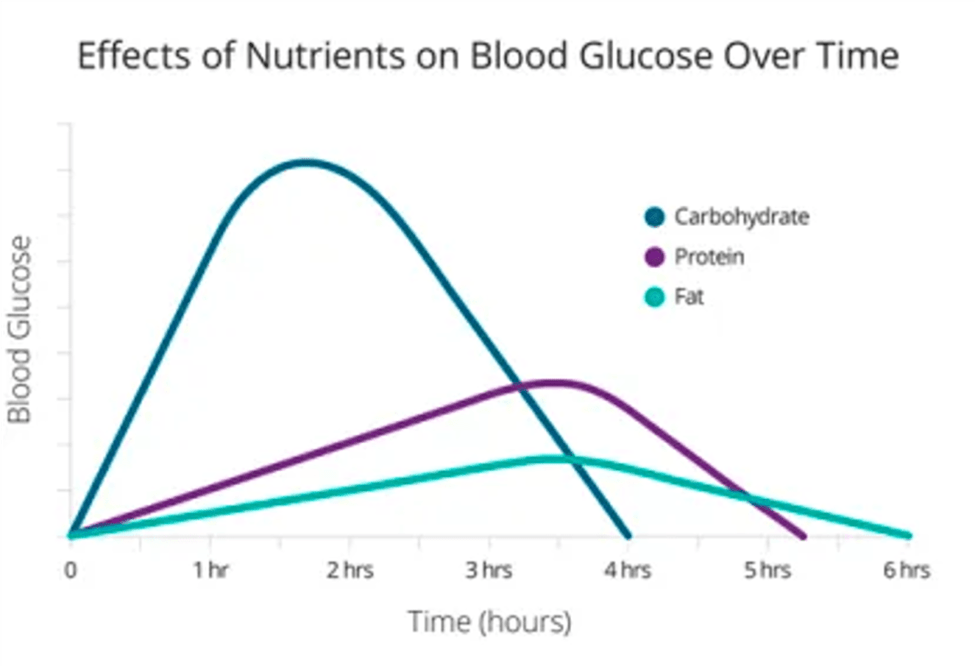
Carbs totally make your blood sugar go up way more than proteins or fats do. And get this: not all carbs hit your insulin the same way!
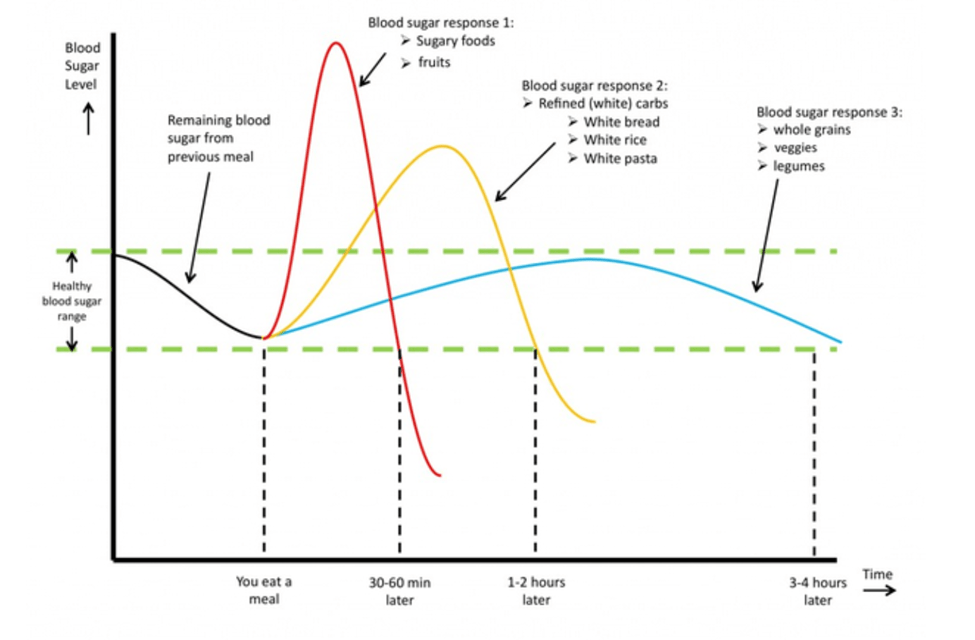
With leptin, your body basically tells you, “Hey, you’re full! Time to stop eating.”

With ghrelin, the hunger hormone, your blood sugar might dip after a crazy insulin spike. Maybe your stomach feels empty too. Society has basically trained your body to rely on carbs for energy and get that glucose fix. So you grab some breakfast, like orange juice, toast, and pancakes drenched in syrup at 7 AM. You get a sugar rush, but then it drops, and you’re left feeling wiped out. By 10:30 AM, you’re practically dying for lunch, but there’s 350,000 calories of fat hanging out around your waist. Why isn’t your body using that?

Doctors always say, “just eat less and move more,” right? But let’s be honest—if you catch wind of a buddy’s dinner party featuring mouthwatering ribeye, seafood, and a spread that could feed a small army, are you really gonna pass it up? Nope, you’re diving right in to enjoy every bite! You might even eat light earlier and crush a tough workout to earn that appetite. The same advice doctors dish out just ends up making you hungry all the time. But for real, telling folks to simply eat less and hit the gym isn’t exactly solid advice for a bunch of reasons:
- It keeps you feeling hungry all the time and makes your body rely on carbs and sugar for energy. Since you haven’t jumped into our program yet, your body is just craving the next carb fix.
- It totally skips over any solid macro nutrient advice, which you’ll get why in a sec.
- It totally skips over the different kinds of movement, how to actually fuel them right, the role of electrolytes, and what a solid recovery plan looks like.
- None of this really dives into whether the person might have ADHD, which means they might need those constant dopamine boosts. A lot of the food out there, thanks to “big food,” is engineered to be super tasty and even kinda addictive by tossing in stuff like MSGs. So, if someone has undiagnosed ADHD, they might struggle with food cravings, and the usual “physics-based” nutrition advice just doesn’t cut it.
- Insulin shuts down fat breakdown. So, if a dude’s rocking 350,000 calories around his spare tire, carbs would inhibit tapping into those stores. So why do docs keep saying to eat carbs? A high-carb diet can make you feel all sluggish and really mess with your fat loss goals.
- Stress. So, cortisol is that hormone that makes your body cling to fat like it’s your favorite security blanket. Your body kinda freaks out, thinking it’s back in the stone age dodging tigers, and it slows down your metabolism to save energy. Just a heads up, when we talk about this stuff, it doesn’t really take into account the different kinds of stress each person is dealing with. Getting a grasp on mental health and understanding stress might just be the key to helping that scale go down naturally. You need some stress-busting techniques that don’t just rely on quick dopamine hits.
- Inflammation. You’d be surprised, but a lot of those “healthy” foods can actually make your joints and bones hurt. Once you clean up your diet, you’ll feel the difference in just a few days. The stuff you munch on might kick-start inflammation and cause issues like skin breakouts. But with a keto reset and a low inflammation diet, your skin will bounce back in no time, and your hair will feel thick and full!
- Rest. If you’ve ever tried keto, you know that crazy “coma sleep” vibe it gives you. When you’re shoving all those carbs down your pie hole, your sleep doesn’t hit quite the same.
- Accountability. Many people start plans without a clear strategy and often get stuck or give up. What if there was a tailored plan with healthcare pros checking in weekly (one rotating over four weeks)? This would keep them accountable while covering mental and physical health, nutrition, meal planning, and workouts. For instance, someone with ADHD might struggle with standard routines like “bro splits.” Instead, they could do a “muscle confusion” workout for an hour each week, using different exercises and intensities to stay engaged. Those with undiagnosed ADHD might find boring routines tough, while enjoyable activities could work better. Plus, the right ADHD meds could help with repetitive tasks.
- So, Dr. Ken Berry says docs only get about half a semester’s worth of nutrition training in med school. A lot of what they share is just the same old stuff from the past 50-60 years that’s part of the AMA rules. They can’t really stray from these guidelines, but nowadays, more and more are warming up to the perks of keto and low carb. So, look for a doc who’s down with this way of thinking!
- Honestly, a lot of what we think we know about food and nutrition is just total nonsense. Then big food and pharma companies swooped in, messed everything up, and made sure you’d end up overweight and feeling awful—just so they could cash in when you finally get sick. Like, do you even need cereal in the morning? And don’t get me started on orange juice; that’s basically just a sugar bomb!
- Sugar has been studied to be as addictive as cocaine. So, to lose weight, doctors essentially tell people, “cut back on the cocaine and move more”. We do not tell a heroin addict to just “cut back”. We send them to rehab under the care of a doctor, therapist, and a support system of people who are also getting out of the heroin business. But with the nutrition industry, we just tell them to cut back on the cocaine and then call them weak when they inevitably relapse.
- Insulin resistance is a real thing that can lead to type 2 diabetes. Doctors tell you to lose weight with the same nutritional advice they have been giving you since you first tipped the scales as overweight. “Lose weight” isn’t the same as “burn fat by reducing your carbohydrates”. If you have a high HBA1C, it is a problem of you not being able to remove glucose from your bloodstream effectively. Following this plan is able to help you do a reset where your body will reach for fat stores first. When you do this, hunger starts to be less and less. While it is true that these plans may work from “less energy in”, what you are doing is listening to your body tell you to eat a little something. When you become fat adapted, you are just a lot less hungry, and your body is able to start chomping fat from your waist instead of your plate.
The issue with so-called “regular” diets is that they tell you to eat 1800 calories and create a calorie deficit. If you’re not even hungry and you’re packing an extra 50 pounds, why bother eating? There are days when you might just have 600 calories of meat for dinner and feel totally fine heading to bed, without thinking about food all day. You didn’t really move around much, your body burned 2300 calories, and boom—you just created a deficit of 1500 calories. No hunger, no exercise—just like that, you dropped 1500 calories, or roughly .4 of a pound of fat, as long as those 600 calories have a decent amount of protein.
Let your body get used to those leptin signals. Later in the program, you’ll probably be hitting the trails hard—think biking, running, hiking—and burning like 5000-6000 calories in a day. With that kind of intense activity, you’ll need about 10-15% of your calories from carbs. So on that 5,000 calorie day, let’s say you munch on 3250 calories, creating a sweet 1750 calorie deficit, which is roughly half a pound. Out of those 3250 calories, you snag 15% from carbs since you’re tackling a lot of hills and sprints. That adds up to about 122g of carbs for the day. And maybe you go for 30% of your calories from protein, which would be around 244g. But let’s be real, that’s a lot to eat, so maybe you keep it at 180g of protein. The rest? Totally load up on fats! Think about using butter, avocado, olive oil, or getting those saturated fats from eggs, cheese, or the tasty beef fat on your ribeye.
In both situations, they pretty much created the same deficit. In the first case, it’s obvious their efforts mostly helped trim down body fat, which isn’t too bad. But the other person, who hit the gym more and ate more, is not only improving their heart health; they’re also working those fast-twitch muscles, packing on more muscle overall, and more muscle means a faster metabolism while they are eating fat!
You can totally just chill, not feel hungry, and still lose weight at about the same pace as someone who’s killer working out for three hours on the bike. The kicker is that the other person was actually pushing their body, which comes with a bunch of awesome benefits. Bodybuilders totally get this “afterburn” thing. When you put in some serious effort, your body spends a bit of time recovering from all that intense training, repairing and building muscle – plus, it can even help you with insulin sensitivity.
This allows you to fuel for extreme days, and the carbs you may have had were mostly from Gatorade during sprints/hills, and right after you had a banana with peanut butter and a protein shake. This also provides potassium for recovery, but the carbs in this food can go towards refilling your glycogen stores and muscle synthesis.
A totally valid question for any doctor is this:
- “If someone’s 100 pounds overweight and doesn’t move much, why on earth would anyone tell them to eat carbs that mess with high insulin levels and inhibit fat burning? Wouldn’t it make more sense for that person to avoid carbs and burn that spare tire around their waist for fuel?”
So, there’s this saying: you can get your fat from your food or from your waistline. Basically, if 60% of your calories are coming from fat, is that fat coming from your plate or your body? You know, maybe chowing down on a big ol’ ribeye for a day isn’t such a big deal for a lot of folks if that’s all they are eating.
Naming our new friends
These four folks below each have their own macro nutrient needs to make it through the day. I mean, it’s pretty clear to anyone watching that their calorie needs are gonna differ depending on what kind of work they’re doing. But here’s the thing science kinda overlooks: all four of them have unique macro nutrient requirements based on the specific type of workload their body is doing. What do I mean by that?
Let’s look at the four types above and assign names to make it easier for us.
- Lazy Larry – This guy just chills on his couch all day. Weighing in at 200 pounds with zero muscle, he’s often called “skinny fat.” Chugging two liters of Mountain Dew and snacking like there’s no tomorrow, he’s kind of short on cash, so it’s all about cheap pasta and processed junk for him. His doctors say he should stick to 1800 calories a day, and his trainer hits him up with these “bro splits” and hands him a workout chart. He actually starts shedding some pounds at first. Hitting the gym six days a week like the trainer told him, he divides it up into chest/tris, back/arms, legs, and then just keeps repeating that forever. But man, he’s always starving, grinding it out at the gym daily, and living on carbs. He gets tired of the same food all the time and ends up getting sick or injured because he’s totally lacking in protein, which means his body can’t fix itself like it should. Lazy Larry throws in the towel, and goes back to the couch until the next New Years resolution rolls around.
- Weekend Wally – By day, he’s just your typical office guy with a long commute. He mows the lawn once a week and chills out watching TV. But come the weekend, he’s all about biking! He might even lift some weights or daydream about hiking. He tips the scales at 200 pounds, has some muscle left over from his wrestling days, but let’s be real, he’s a bit soft around the belly nowadays. He’s looking to shed some pounds, but during the week, he’s got zero time and nobody to team up with. He’s semi-active with the kids, but nothing too wild.
- Fit Fred – he’s not rocking a six-pack, but you can tell he’s put in some hard work bailing hay back in the day. Weighs in at about 200 pounds. Played football and is ex-army. Super active dude. On weekends, he kicks back with some beers and wings with the guys, but still looks pretty fit. If he goes hard for two months, who knows, he might just get those abs popping. Overall, he’s always on the move and can handle carrying bags of concrete for weekend projects.
- Six pack Sam – this dude eats like there’s no tomorrow! Weighing in at 200 pounds with a killer six-pack. Ice cream, pizza, and four cheeseburgers? No problem! He’s ripped and full of muscles. But man, he trains super hard all day long. Maybe he’s an active duty marine going through boot camp, or a pro swimmer, or even a D1 college basketball player. Could also be an ironman competitor, you know? Definitely hits the gym hard, like two hours of heavy lifting every day.
If you’ve been keeping up, you know that the more power you need when you’re tackling some heavy-duty stuff. And the heavy duty stuff is powered by glucose. So if you aren’t killing it on the weekends and are a pro athlete, why are you eating so many carbs?
So, why would you tell these folks to stick to the same calorie count? I mean, Six Pack Sam might be chowing down on 5,000 calories a day! Remember Michael Phelps? Dude was smashing 8,000-10,000 calories daily! First off, Sam needs to get fat adapted. If he doesn’t, he’s just gonna keep hammering in carbs and eventually risk insulin resistance and a little belly, even if he’s lifting heavy. Then doctors will tell this guy who worked out his whole life to “lose weight” without ever addressing the insane level of carbs he is ingesting. Because he’s a heavy lifter, he doesn’t do a lot of cardio, and with this, the insulin spikes can lead to insulin resistance over time.
Six Pack Sam totally needs to crank up those explosive moves and pack some serious power for a good while. When it comes to VOLUME, he’s gonna need a boatload more carbs than Lazy Larry!
Let’s compare a silly example:

Much of this is inline with what Mark Sisson recommends at the Primal Blueprint. We will be recommending this as one of the plans you can look at further with this.

We can provide some examples of our heroes below. Using the above information, how would we build an initial plan for them?
- Lazy Larry – Maybe you suggest that Lazy Larry eats 1800 calories a day, but only 5% of those calories are carbs? A carb is 4 calories. That is 22.5g of carbs per day. His body needs 130g of glucose for the brain to operate. Maybe you have 60% of calories as fats (fat is 9 calories per gram) and 25% protein (4 calories per gram). This means he would be then looking for 120g of fat and 112.5g of protein. For the brain to work, it needs 130g of glucose. Or, in this case, you have a deficit of 108g of glucose, which can be derived from the dietary protein. The fats and proteins provide a lot of satiety, so Larry starts eating one meal a day (OMAD).
- Weekend Wally – he’s definitely more of a weekend warrior, but his activities are usually on the chill side. He might squeeze in some zone 2 running or go for a hike that needs a little glucose boost. So, you could suggest he sticks to 1800 calories a day like Lazy Larry during the week, with 22.5g of carbs. But come the weekend, he can amp it up to 2400 calories with about 7% carbs. That way, he’s looking at around 42g of carbs on those more active days. He may even be fine up to 100g of carbs. But he’s moving and doing challenging work.
- Fit Fred – he hits the gym a few times a week. He wants to maybe cut 10-20 pounds to look more chiseled. He runs at times, and likes to race 5ks. He does weekend projects at home. He might be fine most days with 2400 calories with 7% carbs (42g) like Wally, but many days he’s more intense with a rec tennis league sometimes, and a rec basketball league others. Those particular days, maybe he has 10% of his 2700 calories as carbs, for 67.5g of carbs. He also may be fine up to 125g or so of carbs.
- Six Pack Sam – he can more or less eat a LOT of carbs. For example, let’s look at Lebron. He is “ketogenic” and averages 250g of carbs per day. If he is like Phelps with 8000 calories per day, a person that needs Phelps/Lebron activity could need 12.5% of their calories in carbs. This means LeBron is so active, he has a six pack, he’s 6’9″, and is training every day. These guys are drinking gatorade, not only for the carbs to fuel them, but the electrolytes to keep from a heart attack.
So, here’s the deal with what medical science says. All four of these guys are basically the same height and weight, and their BMI’s are pretty much the same. But honestly, body fat percentage is probably a way better way to figure out who’s actually healthy, along with some other measures like blood pressure, cholesterol HDL:LDL ratio, HBA1C, and resting heart rate. Still, they’re telling Lazy Larry to chow down on whole grains, fruits, and veggies. If his doc says he should stick to 1800 calories a day, it’s super easy for Larry to consume on the same amount of carbs as LeBron. This is why LeBron may have a six pack and eat 250g of carbs per day, and Larry is Lazy on the couch eating 200g of carbs per day.
Let that one sink in. Your medical professionals are telling you to have the same amount of carbs per day as Lebron, yet you sit around your house. It has been shown that sugar is as addictive as cocaine. Yet we just tell people to “lose weight” without a care about what the massive insulin hits are doing to their system? You can get “insulin resistance”, which is like when you get a resistance to alcohol. You need more and more to do the same effect. This then leads to a metabolic syndrome and welcome pre-diabetes or type 2 diabetes to the chat.
Right about now, the light bulb should be going off. Why are we telling people that are massively overweight to eat carbs?
Solution
We are about trying to determine what “type” you might be. Understand underlying health conditions. Maybe today you are a Lazy Larry. You should work to get up to a Weekend Wally. Weekend Wally should work to get to Fit Fred. Fit Fredd may want to get to Six Pack Sam. This is done by:
- Assessing physical and mental health of patient.
- Deploying a macro solution to induce ketosis for a period of time
- Gradually add in 5g of carbs per week. Do more “power” work AS you add carbs.
- If you have a lot of weight to lose, stay out of the idea of “gaining muscle” by preserving the muscle you have with adequate protein consumption. Steady state zone 1-2 activity along with severe carb restriction will trigger lipolysis and the patient will not be hungry. They can start to actually feel the leptin/ghrelin at certain times the body ACTUALLY needs it.
- Introduce 1 and 3 day fasting protocols. This allows the body to do “autophagy” to cleanse your body of malformed cells. This won the nobel prize in 2016 and is thought to help with keeping you looking young, destroying cancer cells, and reducing caloric intake WHILE preserving lean body mass. A ketogenic approach helps this. It also helps repair insulin sensitivity.
- Determine which character they want to be, and design a plan to fit their needs to do this, with the types of activities and carb% they may need. Each person should only be training to the person next to them, and not 2-3 past them. That can set someone up for failure. Create reasonable and goals that can be accomplished. It is easier to lose 5 pounds than 100. But if you just take 5 pounds at a time, and continue that path, the 100 is achievable.
- Work with them until goal is met.
- Enter maintenance phase where accountability goes from one pro weekly to one pro monthly for a 15 minute check in
- Understand how to use carbs sparingly in life, and how carbs can effectively fuel specific types of activity.
Advanced concepts we will address on this site outside of this page:
- “fat adapted” is the process of entering ketosis for a period of time to “teach” the body to burn fat as the primary fuel source. This is a pre-requisite of all plans above.
- A person who is fat adapted has an almost endless tank of energy for zone 1-2 training. This is different from the “gel packs” needed for people to train for marathons and races. One can do triathlons on very low levels of carbs and be highly competitive. However, you would see above how we would recommend higher levels of carbs around days of heavy loads and intense workouts.
- “targeted carbs” – it is recommended that in a lot of these programs, that if carbs are ingested, that it is targeted before or after (or during) exercises that require glucose. For example, you can do 40 miles of biking on a flat rail trail using ketones but a 10 mile hilly ride could require a LOT more carbohydrates. Someone on that hilly ride who is doing sprints may be able to drink Gatorade during that race, and the next day still wake up in ketosis – because the body is immediately using that glucose for power, or replenishing glycogen stores. When off of the hills and then going back to zone 2 – because you are fat adapted, the body is sparing carbs and using fat stores for that activity. This would not be happening unless you were “fat adapted”. So if you know a steep hill is coming, you can have a strong sip of gatorade and push up the hill. Either it is being immediately used, or it is replenishing the glycogen stores. It never really gets the chance to spike the insulin.
- “Dead Zone”. Those new to this have a very difficult time giving up carbs. If you are 100+ pounds overweight, you do not need another carb to live, unless you are hypoglycemic. Of issue is many who try these types of diets cannot get low enough in carbs, for long enough time to get “fat adapted”. The longer you stay in ketosis, the more rapidly you will lose weight. But the plan is to gradually bring people higher. This helps the brain get the glucose it needs, but it helps you refill your glycogen stores and do some power work as needed. What many people have a problem with is that they are having too little amounts of carbs to get and stay into ketosis for that 3-6 weeks, but too little carbs to fuel them – so they get tired, hungry, and quit before they can even get “fat adapted”
- Novelty. This program is meant to have exercises designed to stimulate the client. Something different all the time, based on their interests
- Inflammatory foods. It is imperative to reduce “fried foods” and “seed oils” and things that have a high omega 6:3 ratio.
- Ketoacidosis is different than ketosis. Many confuse the two
- Recovery from training is needed. Over training can produce cortisol and body stress. The older you get, the more you need to factor recovery in
- Protein. This obviously is used to repair tissue damage from working out, but if you are doing too much steady state cardio, with not enough carbs, and not enough calories in protein, your body will break down muscle mass to get glucose for the brain.
- Zone training is extremely important. If you are accidentally in zone 3, you can go hard enough to cause tissue damage and may require more rest. Zone 2 training is recommended by us for 20-30 minute durations only, to preserve protein. When you get to Fit Fred’s level, we can now increase duration of steady state cardio, but we must also increase carb and protein levels. Too MUCH exercise can take lean body mass off of you and reduce your metabolism while making you injury prone. “exercise more” for many has them doing TOOOOO much to lose weight faster, but this is detrimental to the long term.
- Weight puts stress on your joints and muscles. While the temptation may be to run at 250 pounds if you were an athlete prior, this puts a lot of wear and tear on the body. Yes, you can obviously increase the caloric deficit. But if you do this for an hour and are already in severe caloric restriction, you can hurt your feet, back, knees, etc.
- Mental health. “Sound body, sound mind”. In the case of an ADHD patient, they may have food as a reward and coping mechanism dialed in, and frantically searching for dopamine hits all the time. In the case of an ADHD patient, perhaps they address their ADHD, understand it, and get medicated for it. This can reduce the dopamine seeking behaviors and potentially reduce food as a coping mechanism. ADHD meds can also have amphetamines in them which also act as an appetite suppressant. It is of interest that 20% of the population has ADHD, and many have never been diagnosed.
- The implications of this program are at national security level, as this approach has the capability of being a long term solution to how people approach diet and exercise, drive down the obesity rates, and with this – reduce all other metabolic diseases. Cancers, heart attack, stroke, dementia – all of this can be reduced.
- There is no money in curing people. They do not want people to eat the “right way”. They want you to get sick so they can sell you pills you need for the rest of your life. They need you to get sick to pay for all of the fancy hospitals and equipment. While we do have amazing doctors and health capabilities, the best treatment is prevention. This is a prevention-based approach to a national healthcare crisis.
- Autophagy – any weight loss and health programs should have some form of fasting protocols for cancer preventions, insulin sensitivity, caloric reduction, and decrease in body fat percentage while preserving lean body mass.
- “Cheat” days. It is ok, once fat adapted, to have a cheat day or weekend once a month. This allows indulgences periodically to make a higher carb day the exception, not the rule. It is typical that a person who takes 1-2 days off of this protocol to be very thirsty when eating a high level of carbs and gain 5-10 pounds immediately. The next day, return to the protocol and within 3-4 days all of the “water weight” added are urinated out. This helps adults be able to have a piece of cake at someone’s wedding, an ice cream cone with their kids every now and then, or to have a day where they are out at a celebration and have too much to eat. The problem is that the entire establishment has convinced you that carbs are what you are supposed to eat, and fats cause heart attacks. They don’t
- 7 countries study. Ancel Keys 7 countries study was used as the basis for most of modern medical nutritional science. First, the study was 22 countries and not 7. The rest were dropped so he could cherry pick data to draw a direct correlation to saturated fat intake and CVD percent of a population. While the line looked impressive, this study also skipped populations like the inuit who had a majority of all of their calories as saturated fat and no real detectable CVD within their entire communities. This “de-bunked” the thesis that fat is causing heart attacks. Turns out the sugar industry bought off Harvard researchers in the 1960s to point to fat as the cause for CVD.
- The role of cholesterol. Cholesterol is produced by your body. It is what your brain is made of. It is used to repair arterial damage. People have seen a high cholesterol number and prescribed statins. You should be looking instead at the HDL/LDL ratios. To improve these ratios, it is suggested to have a low inflammatory diet.
 Low Carb Fitness 180